PharmaCentraal: Fixing IV Compounding Documentation in Hospital Pharmacies
The prep list is in the system. The compounding record is still a handwritten form.
IV compounding in a hospital pharmacy happens under time pressure. A prep list comes in — 40 bags for the morning run, a mix of concentrations, multiple drugs, multiple volumes. The pharmacist has to calculate vial pulls, verify quantities, and fill in a compounding record for each preparation.
That record is a regulatory document. It gets reviewed by the Joint Commission. It has to be accurate, complete, and retained.
Most hospitals still do it on paper.
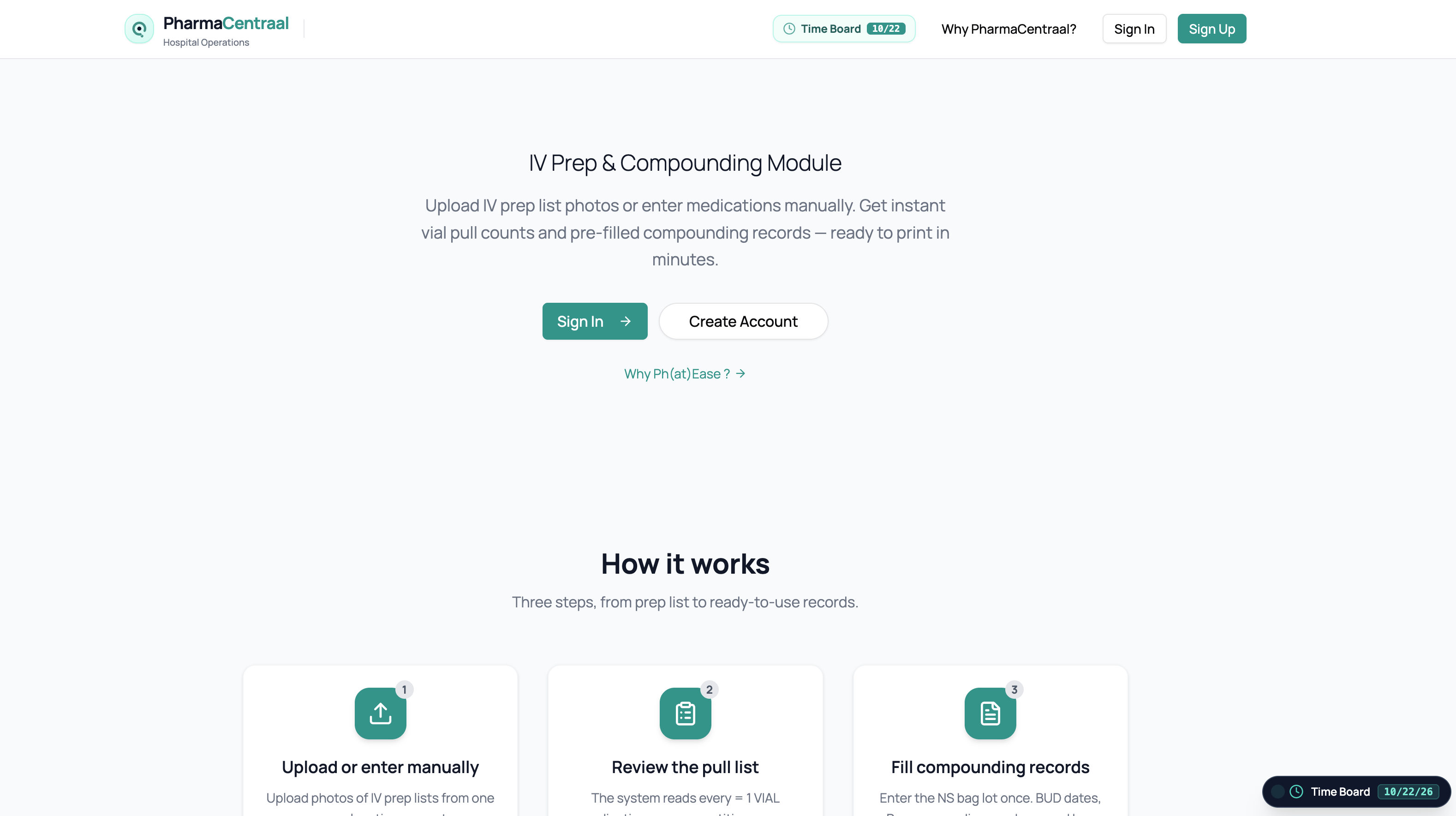
What PharmaCentraal does
Upload the prep list — or enter medications manually. PharmaCentraal calculates the exact vial pull counts for each drug based on concentration and volume, then generates pre-filled compounding records ready to print and sign.
What used to take 20–30 minutes of manual calculation and form-filling takes under 2 minutes. The math is done once, correctly. The record is standardized.
Why I built it from inside
I worked the compounding bench at Kindred Hospital. I know what that prep list looks like at 6am when the first batch needs to be ready before rounds. I know which parts of the form get rushed. I know where transcription errors happen.
PharmaCentraal isn't a form digitization project. It's built around the actual cognitive load of that workflow — what needs to be surfaced, what can be automated, what has to be human.
What happened next
I pitched it directly to hospital pharmacy leadership at Kindred. The reception was strong. The adoption barrier in hospital pharmacy isn't product quality — it's IT procurement, validation requirements, and the 6-18 month enterprise sales cycle that comes with any clinical software.
That's a solvable problem. If you work in hospital pharmacy operations or healthcare IT and want to talk about what this looks like at your facility, I'm interested.