What If You Could Simulate a Law Before It Passed?
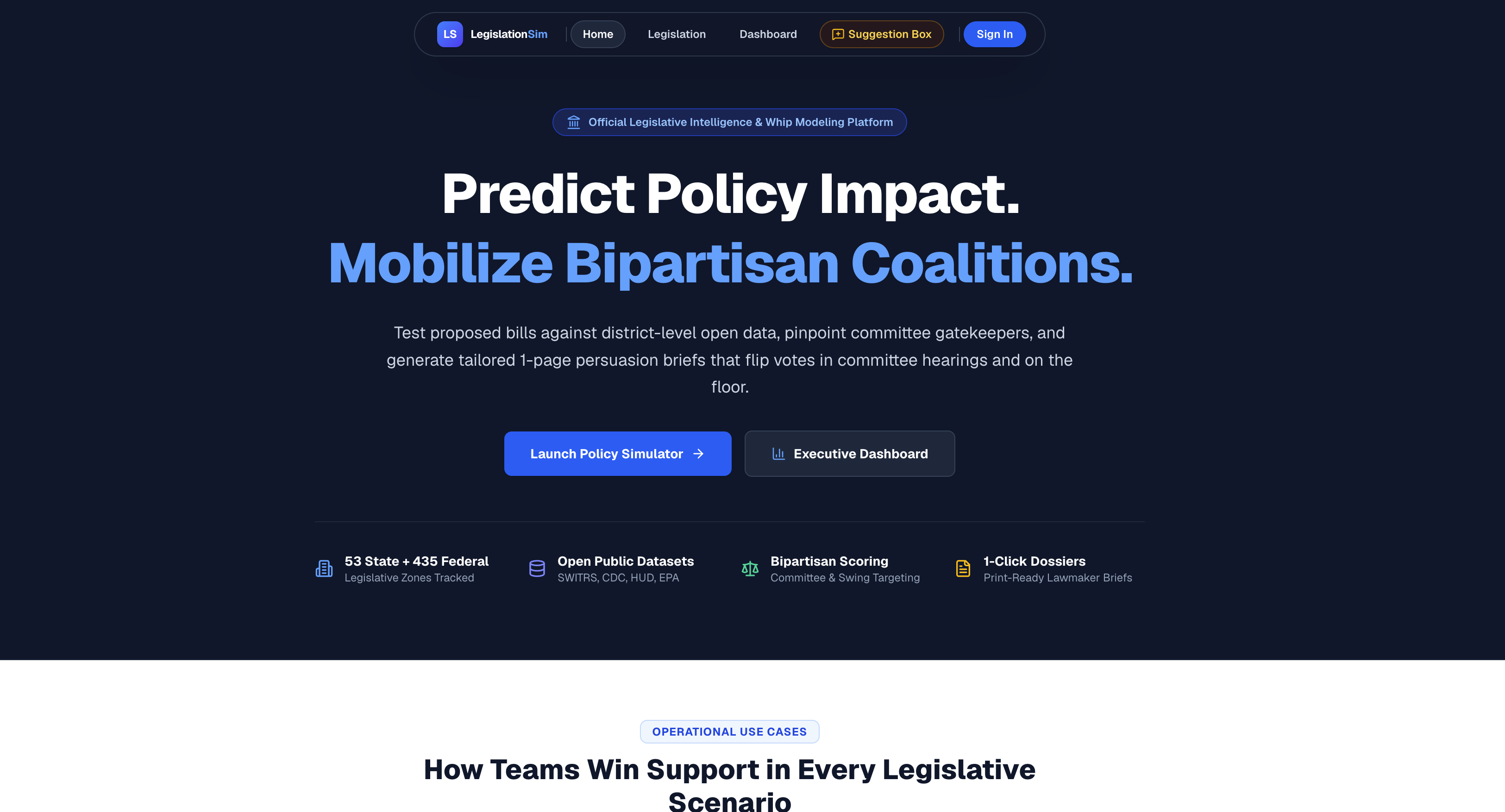
The Legislation Simulator models stakeholder impact before a bill becomes policy.
Most policy debates happen at the level of intention. Proponents describe what a bill is meant to do. Opponents describe what they're afraid it will do. Almost nobody has a structured model of what it will actually do — to which stakeholders, in which order, with which downstream effects.
That's the gap the Legislation Simulator is built to close.
How it works
You input a piece of proposed legislation — a bill summary, a policy description, a regulatory change. The simulator uses AI to identify the primary stakeholders affected, model the direct and second-order impacts on each group, and surface likely unintended consequences.
The output isn't a verdict. It's a structured impact map — who gets affected, how, and by how much — that gives policymakers, advocates, and journalists a common vocabulary for the debate.
Why this is hard to do manually
Legislative impact analysis exists. It's called fiscal note analysis, regulatory impact assessment, and stakeholder comment periods. The problem is that these processes are slow, expensive, and dominated by whoever has the resources to submit formal comments.
A small advocacy organization representing a community affected by a zoning change doesn't have a policy analysis team. A city council member voting on an amendment to a building code doesn't have 72 hours to commission a study.
The simulator makes structured impact modeling available in minutes, not months.
The civic tech angle
I'm building in civic tech because the public sector is where the stakes are highest and the tooling is worst. Decisions that affect millions of people get made with less analytical infrastructure than a mid-market sales team uses to track pipeline.
That asymmetry is worth fixing. The Legislation Simulator is one piece of it.
If you work in policy, legislative affairs, civic journalism, or public advocacy, I'd like to hear what questions you're trying to answer.